Home
- LEDsaddremove
- Componentsaddremove
- Power suppliesaddremove
- LED strips
- LED modules
- Aluminum profiles and accessoriesaddremove
- LED, CCFL rings
- Lampsaddremove
- Car bulbsaddremove
- Accessoriesaddremove
- Smart homeaddremove
- Shielding technologyaddremove
- Metal fireplaces
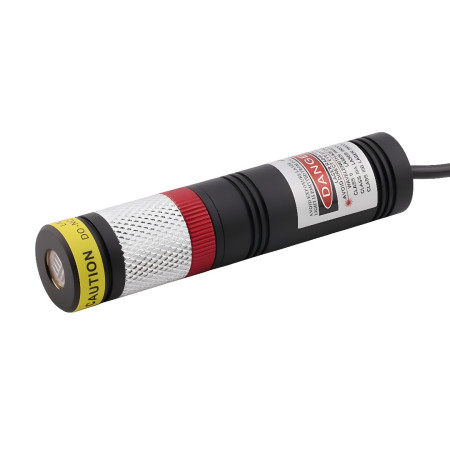


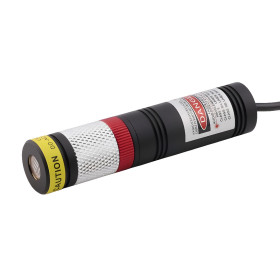
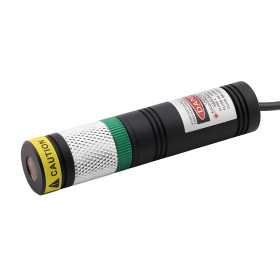
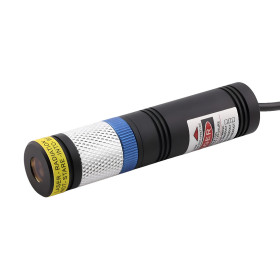
Laser module red 660nm, IP67 - 10x10 grid
Red laser module (660nm), power from 50mW to 200mW, DOE lens grid 10x10.
⚠️ Safety warning: This laser module is an electronic component intended exclusively for professional, laboratory, and industrial applications. It is not intended for consumer or household use and must not be used as a laser pointer.
During operation, it is necessary to comply with the safety requirements of the EN 60825-1 standard and to use appropriate protective equipment. The manufacturer of the final device is responsible for the resulting laser classification according to EN 60825-1.
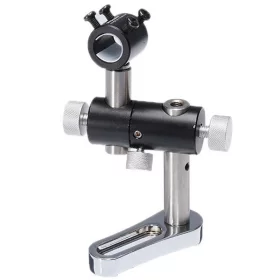
The laser module with a red wavelength of 660 nm is designed for projection of a 10×10 dot grid (DOE) and is used mainly for positioning, aiming and position control during cutting and other industrial operations. The design in an aluminum housing and the possibility of sharpening allow the projection to be adapted to a specific application.
Technical specifications
- Wavelength: 660 nm (red)
- Beam shape: DOE 10x10
- Beam angle: 42x42°
- Optical power (variants): 50 mW, 100 mW, 150 mW, 200 mW
- Real output power:
- 50mW (38–45mW)
- 100mW (75–95mW)
- 150mW (100–120mW)
- 200mW (130–150mW)
- Operating mode: CW (continuous light)
- Current control: APC
- Supply voltage: 5V DC
- Operating current: < 500 mA
- Connector type: DC 5.5×2.1mm/5.5×2.5mm
- Cable length: 100 cm
- Housing material: aluminum
- Optics material: PMMA
- Module dimensions: diameter 20 mm × length 90 mm
- Weight: 65g
- Protection: IP67
- Operating temperature: -10°C to +50°C
- Storage temperature: -40°C to +85°C
- Mean Time to Failure (MTTF): > 8,000 hours
Functions and features
- 10×10 grid projection for quick visual positioning
- Focusable optics (adjustable focus)
- Compact aluminum housing for better heat dissipation
- 5 V DC power supply for integration into machine and control systems
- IP67 protection for use in more demanding operating conditions
Ideal for
- Positioning during cutting and marking in industrial machines
- Setting reference points and checking position in assembly fixtures
- Visual guidance in automation and production lines
Package contents
- Laser module with connecting wire and DC connector
Why choose this product?
- Defined 10×10 grid projection using DOE optics
- Standard mechanical design Ø20 × 90 mm for easy integration
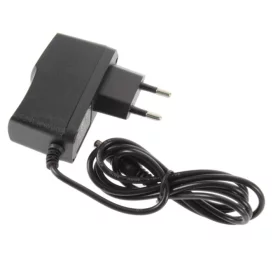
- 5 V DC power supply and finished DC 5.5 × 2.1 mm cable termination
- Durable design with IP67 protection
Installation and operating instructions
- Ensure a stabilized 5 V DC power supply with sufficient current reserve for the selected power option.
- Mount the module in a way that ensures cooling of the housing and mechanical stability of the projection.
- After assembly, adjust the focus according to the desired size and sharpness of the projection at the working distance.
- Connect the 5.5 × 2.1 mm DC connector when the power is disconnected.
Safety notice
- This is a laser source. Do not point the beam into your eyes or observe the direct or reflected beam.
- During installation and adjustment, use appropriate protective equipment and follow the internal safety regulations of the workplace.
- Operate the module only within the specified electrical and temperature conditions.

- Light color
- Red
- Wavelength
- 660 nm
- Voltage
- 5 V DC
- Connector
- 5.5x2.1 mm
- Waterproof grade
- IP67
- Lifetime
- 8,000 hours
- Beam angle
- 42°
- Appearance
- Grid
Introduction
This manual provides instructions for the safe use and regular maintenance of laser modules designed for projecting indicators (lines, crosses, dots, and DOE/grids) with a maximum output of up to 2000 mW. The document also includes the definition of a safety zone based on tabulated values that determine the distance at which the exposure is classified as Class 3B (higher risk) and from which it is classified as Class 3R (lower risk).
1. Understanding the Risks of Laser Radiation
- Eye Damage – Direct and reflected laser radiation can cause permanent retinal damage.
- Skin Burns – An intense beam may cause burns with prolonged exposure.
- Mechanical Risk – Improper handling of optical components (lenses, mirrors, DOE) may lead to their misalignment or damage, increasing the concentration of emitted energy.
- Accidental Activation – Service interventions without proper disconnection from power or violation of safety measures may result in unintended laser activation.
2. Overview of Safety Classes and Necessary Precautions
- Class 2
- Low-power lasers (usually up to 1 mW) – safe during brief exposure due to the blink reflex.
- Warning labels indicating not to look into the beam.
- Adherence to safety procedures to prevent accidental increases in exposure.
- Class 3R
- Lasers with slightly higher power (up to several mW) – direct viewing may cause damage, but the risk is relatively lower.
- Output apertures are marked with warning labels.
- Strict adherence to safety distances to ensure exposure remains at Class 3R levels.
- Class 3B
- High-power lasers where direct exposure to the beam can cause immediate and permanent eye damage.
- Requirement for a key switch to prevent accidental activation.
- Implementation of a remote interlock system (e.g., door switch or emergency button).
- Visible activity indicator (“Laser On”) and requirement to wear protective goggles during service interventions.
- Class 4
- The highest power level, where even scattered radiation poses extreme danger to eyes and skin.
- Prominent warning labels and markings, a key switch, interlock system, and mechanical beam shutter.
- The device must have a manual reset after each interruption of operation, and operation is permitted only by qualified personnel in designated areas.
3. Definition of the Safety Zone
The safety zone is defined using a table that specifies:
- Controlled Zone (3B): The area from the device up to a distance of X meters, where the exposure corresponds to Class 3B. Only trained users have access to this zone, and strict measures apply (key switch, interlock, mandatory protective goggles).
- Restricted Zone (3R): The area beyond X meters, where the exposure drops to Class 3R. Basic safety measures, such as area marking and physical barriers, must also be observed here.
Note: The value of X should be determined using the available calculator. Physical marking of the safety zones (floor, wall signs, etc.) is mandatory.
4. Proper Handling of the Product
- Before Activation – Place the device in a stable location where the safety zone is clearly defined. Verify that all safety features (key switch, interlock, protective covers) are functioning properly.
- During Operation – Adhere to the safety zones. Never enter the controlled zone (3B) without appropriate training and protective gear. Ensure that unauthorized personnel do not enter areas with high exposure.
- During Handling and Service – Before any service intervention, completely turn off the device and disconnect it from the power supply. Do not remove or modify any safety features or protective covers.
5. Maintenance and Service
- Regular Inspections – Perform visual and functional checks of the optical components and safety covers. Verify the proper operation of interlock systems, the key switch, and indicators.
- Cleaning – Clean optical components (lenses, mirrors, DOE) only with approved cleaning agents and a soft cloth (preferably microfiber) in a controlled environment.
- Service and Calibration – If deviations in projection or other functional issues are detected, contact an authorized service provider. Document all service interventions and calibrations.
6. Emergency Procedures
- In Case of Malfunction – Immediately turn off the device and disconnect it from the power supply. Prevent unauthorized access to the safety zone and record a description of the malfunction. Contact an authorized service provider.
- In Case of Accidental Exposure – Immediately stop the exposure (turn off the device, leave the beam area). If there is any suspicion of eye or skin injury, provide first aid and seek medical assistance. Document the incident properly.
7. Conclusion and Recommendations
By following the above procedures, you ensure safe operation and minimize the risks associated with laser radiation. A proper definition of the safety zone based on tabulated values (controlled zone 3B and restricted zone 3R) allows for clear delineation of areas where stricter measures must be observed, and provides users with clear instructions for safe handling of the product.
We recommend a regular review and update of the documentation according to changes in operating conditions and personnel training.
EU Importer: AMPUL SYSTEM s.r.o., Čsl. armády 641/40, 78701 Šumperk, Czech Republic,